Good Choices at School
A story about kind actions, safe bodies,
waiting, sharing and trying again.
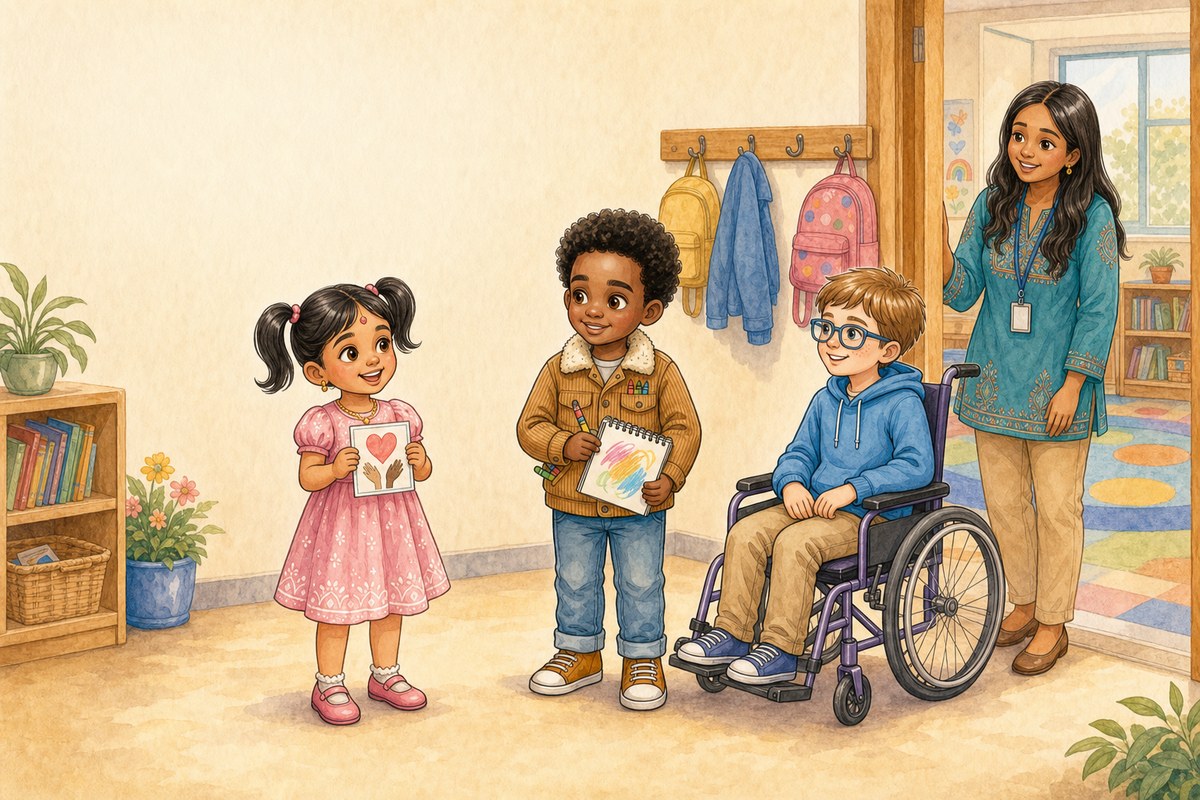
A story about kind actions, safe bodies,
waiting, sharing and trying again.
Personalise
This story can be about me.
I am learning to make choices that help me and other people.
A choice is something I do with my words, hands, feet or body.
What good choices do
Good choices help school feel safe.
Good choices can help me feel calm.
Good choices can help my friends feel safe.
I can practise one good choice at a time.
A learning story
Anya is learning good choices.
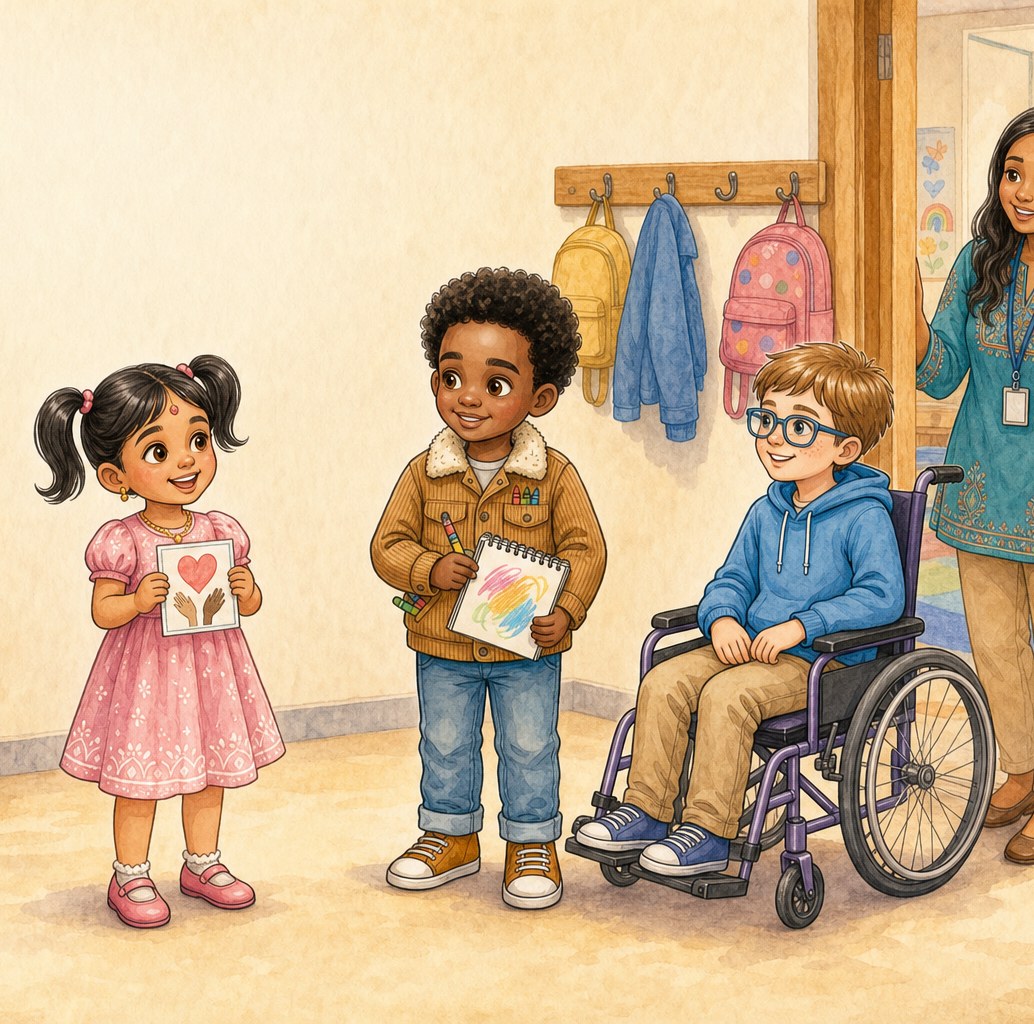
At school, Anya has many moments to choose.
Sometimes choosing is easy.
Sometimes choosing is hard.
Anya can pause and try one helpful thing.
Words
Kind words are good choices.
Kind words help people know what I need.
I can use kind words, even when I feel unsure.
Waiting and turns
Waiting is a good choice.
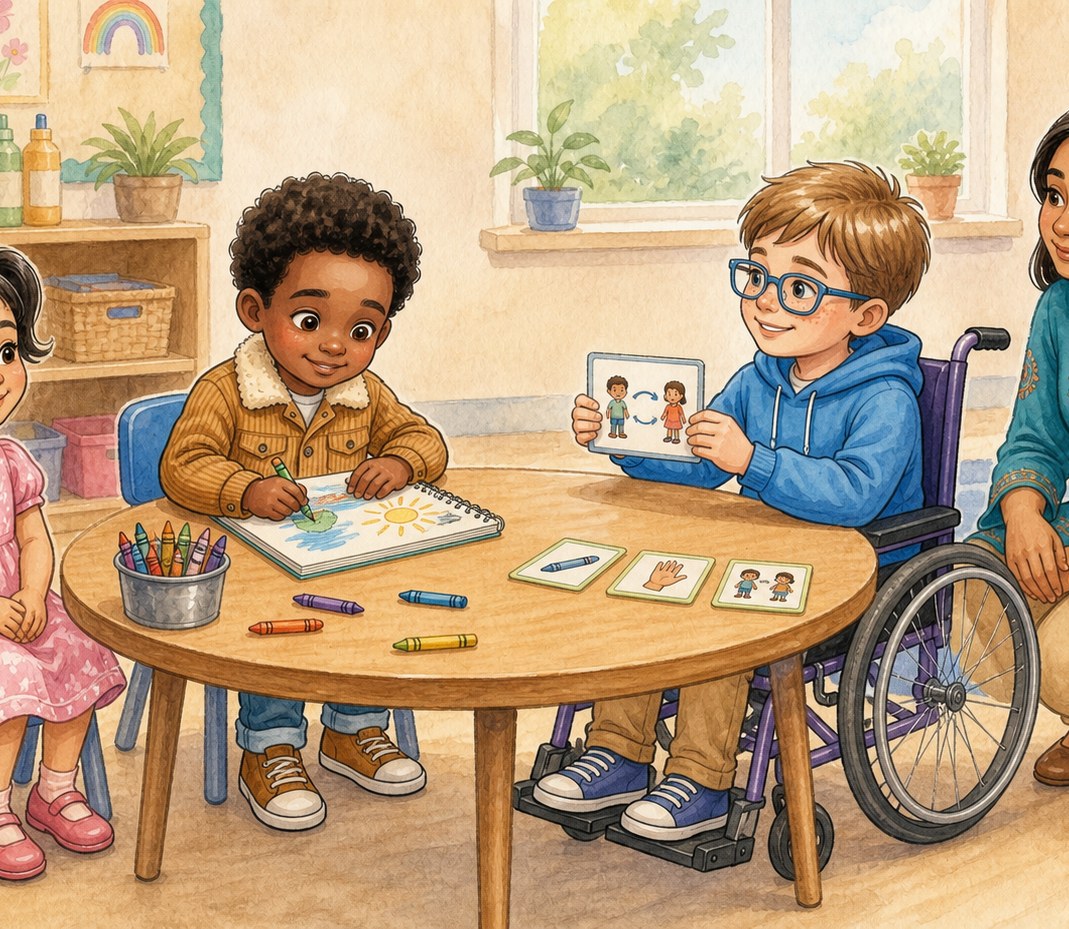
Waiting can feel hard in my body.
I can breathe in and breathe out.
I can watch, count or hold a card.
My turn can come after someone else’s turn.
Safe body
Safe hands and feet are good choices.
My body can be safe, even when my feelings are big.
Sharing and playing
Sharing helps everyone join in.
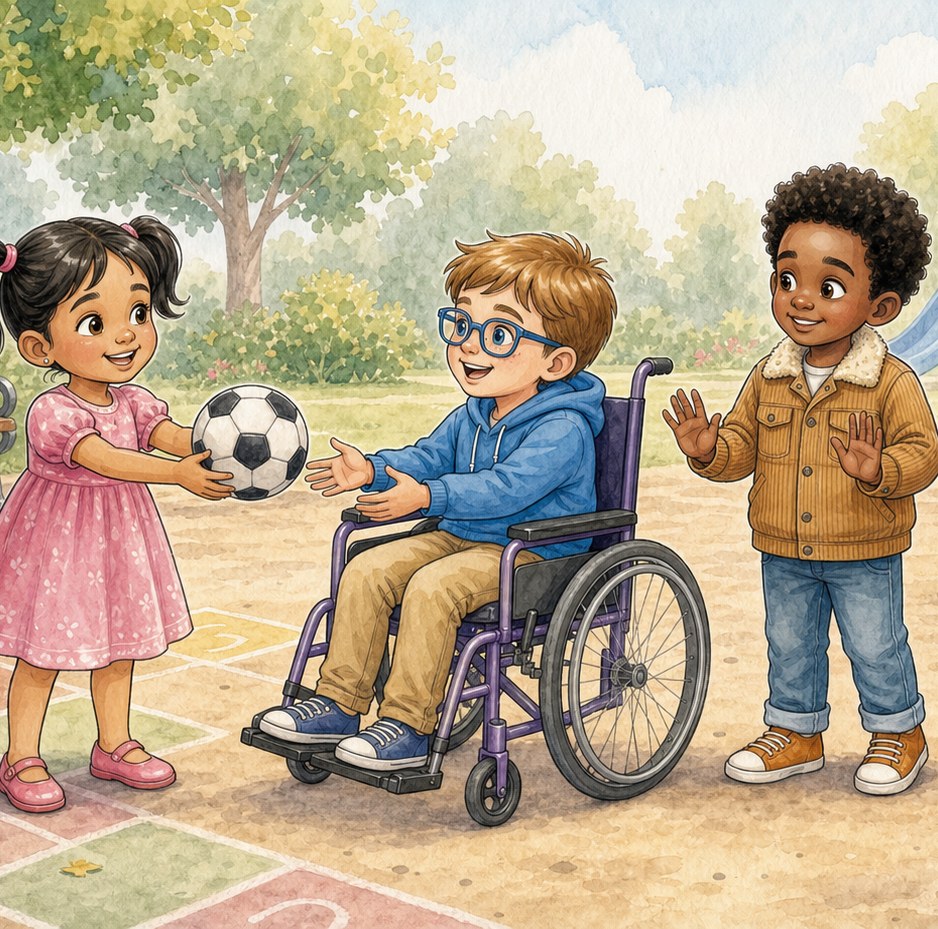
Anya can share the ball with Ben.
Mamadou can keep safe hands while he waits.
Playing nicely helps friends feel included.
I can share, wait, or ask for my turn.
Helping
Helping is a good choice.
Helping does not have to be big.
Small helpful choices matter.
Trying again
Mistakes can be repaired.

Sometimes I might make a not-yet choice.
A not-yet choice can hurt, upset or worry someone.
I can stop, breathe, repair and try again.
A mistake is not the end of the story.
Who can help
A grown-up can help me choose.
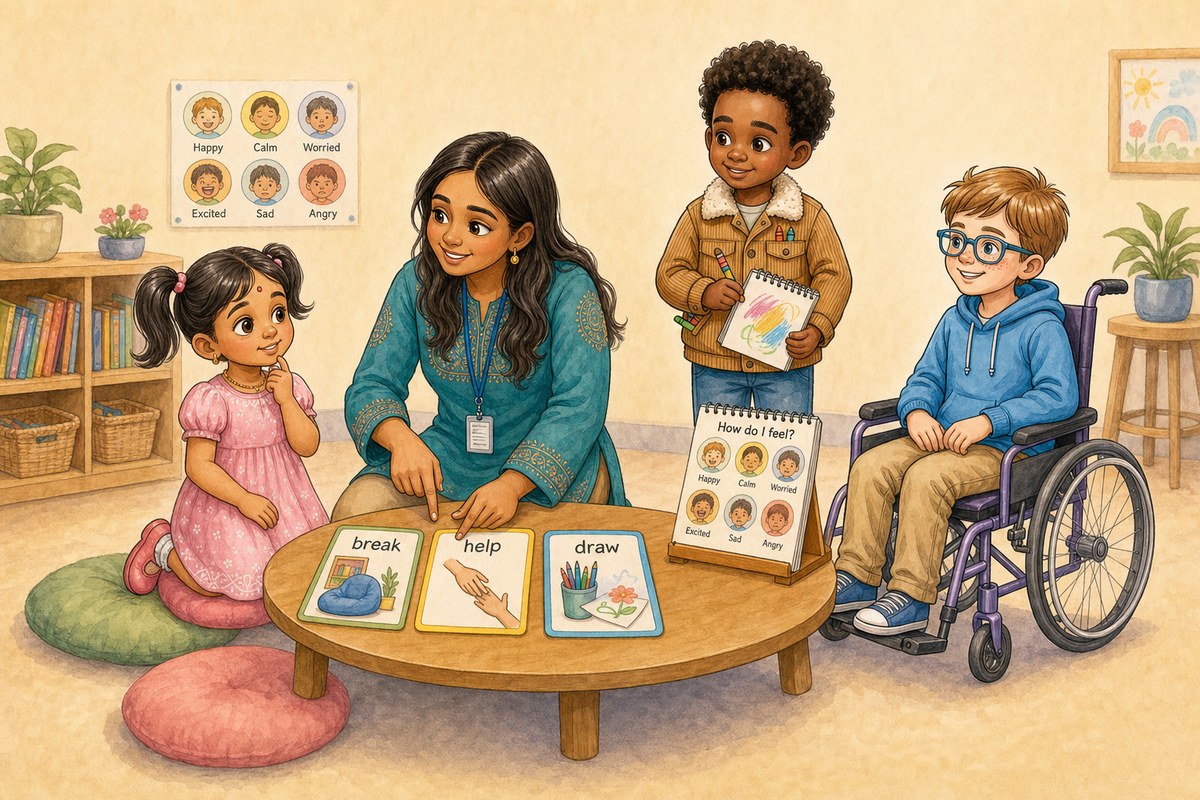
I can ask my teacher.
I can point to how I feel.
I can ask for a break, a card or more time.
I do not have to work it out alone.
Ending
Little by little, choices can get easier.
I can make kind choices.
I can make safe choices.
I can make helping choices.
And when I forget, I can try again.
Reading this story · Good Choices at School
Read this when the child is regulated. It is easier to learn choices before they are needed.
Add the real teacher’s name, classroom details, visuals and school routines.
Use “not-yet choice” for actions that need repair. The aim is learning, not blame.
Choose one skill at a time: waiting, safe hands, sharing, asking for help, or repairing.
Name the good choice when it happens: “You waited. That helped everyone feel safe.”
Use the story as a reflection tool: “Which choice was easiest today? Which one can we practise?”