Making Friends at School
A story about small hellos, safe play,
joining in and trying again.
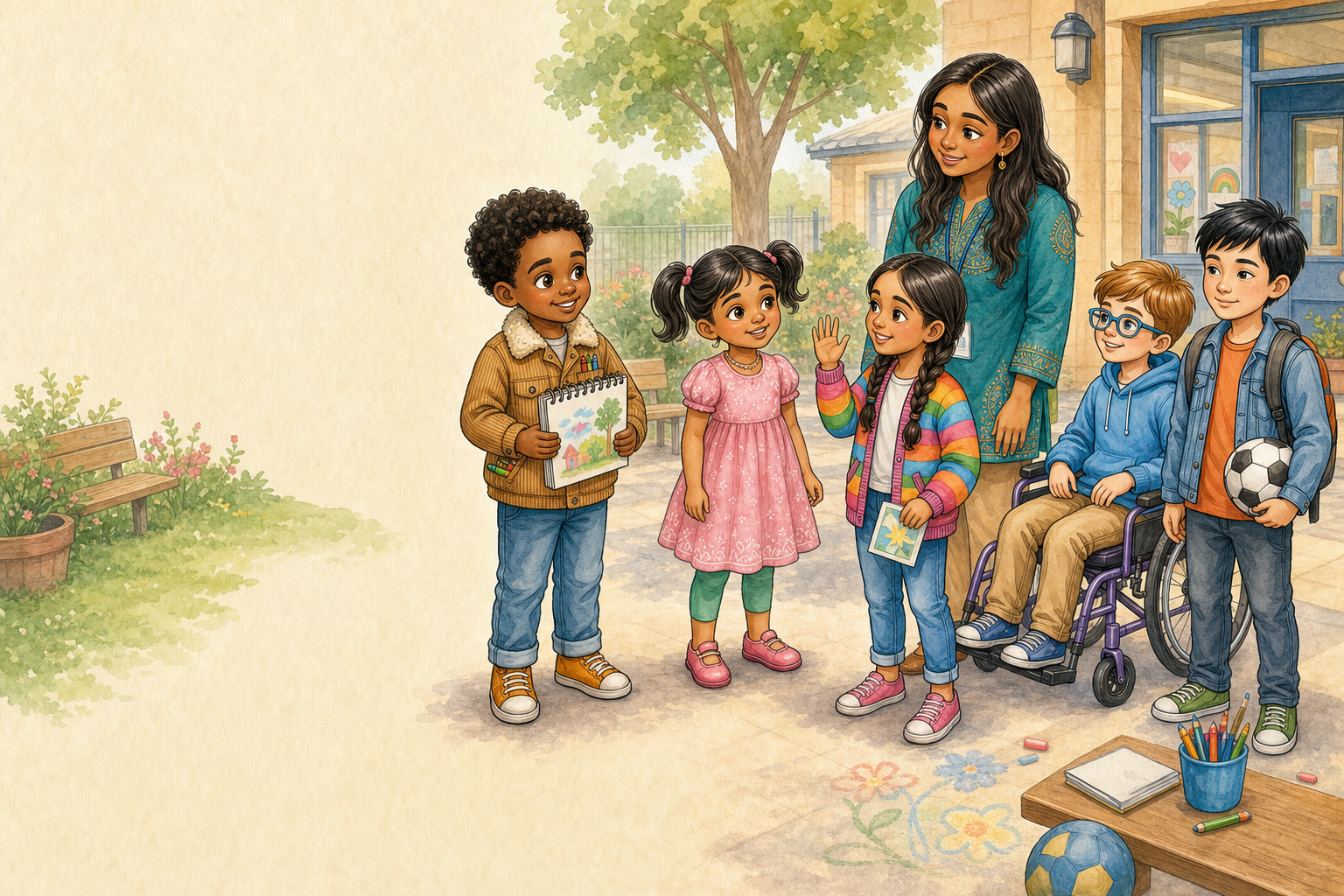
A story about small hellos, safe play,
joining in and trying again.
Personalise
This story can be about me.
I am learning friendly choices that can help me connect with people.
I do not have to make a friend all at once.
What friendship means
Friends grow from friendly choices.
A friend is someone I can be kind and safe with.
A friend may like some things I like.
Friendship can grow slowly, one small moment at a time.
Starting small
A small hello can be enough.
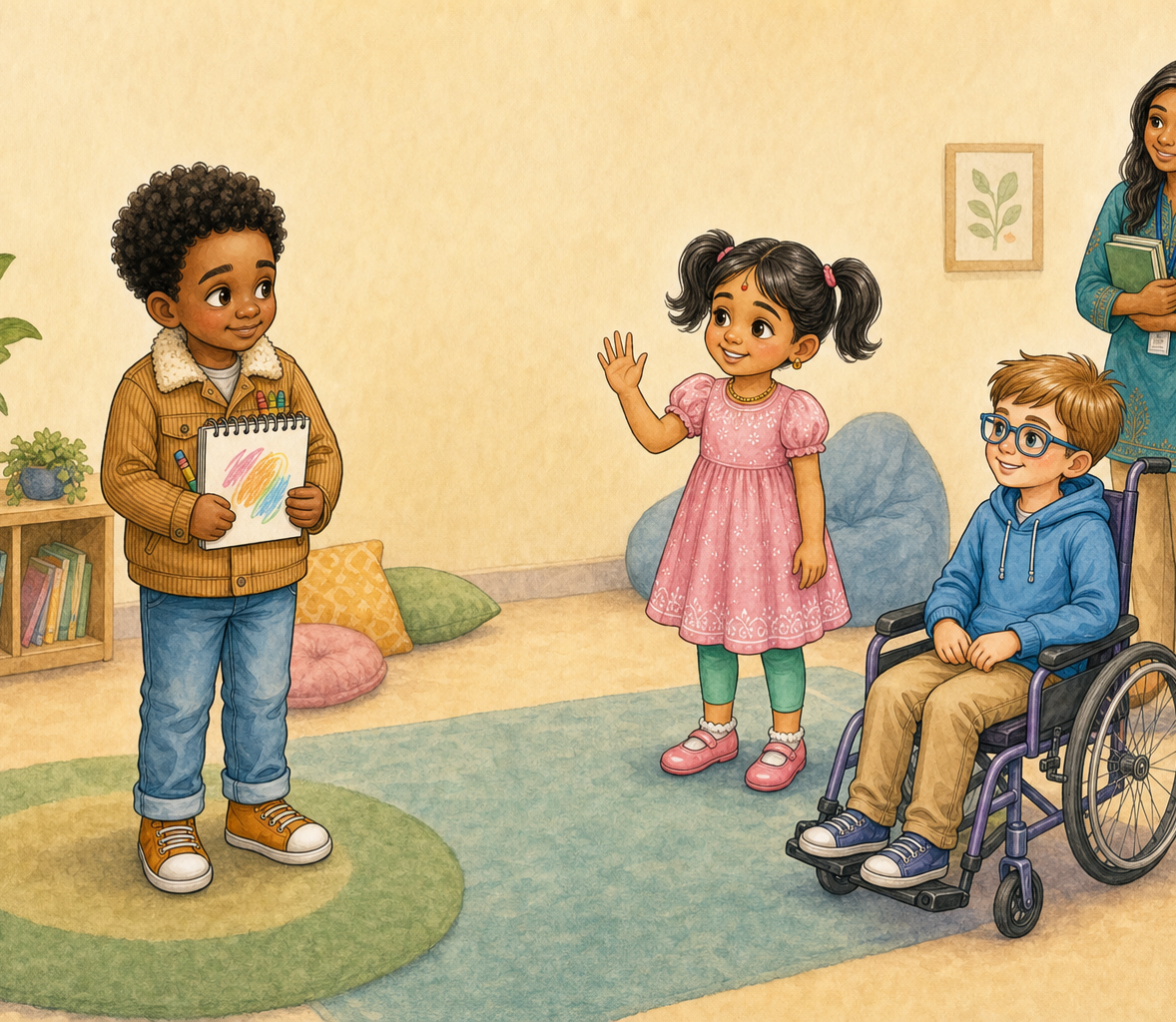
I can smile.
I can wave.
I can say hello.
I can just be near someone quietly.
Small friendly choices count.
Shared interests
I can notice what we both like.
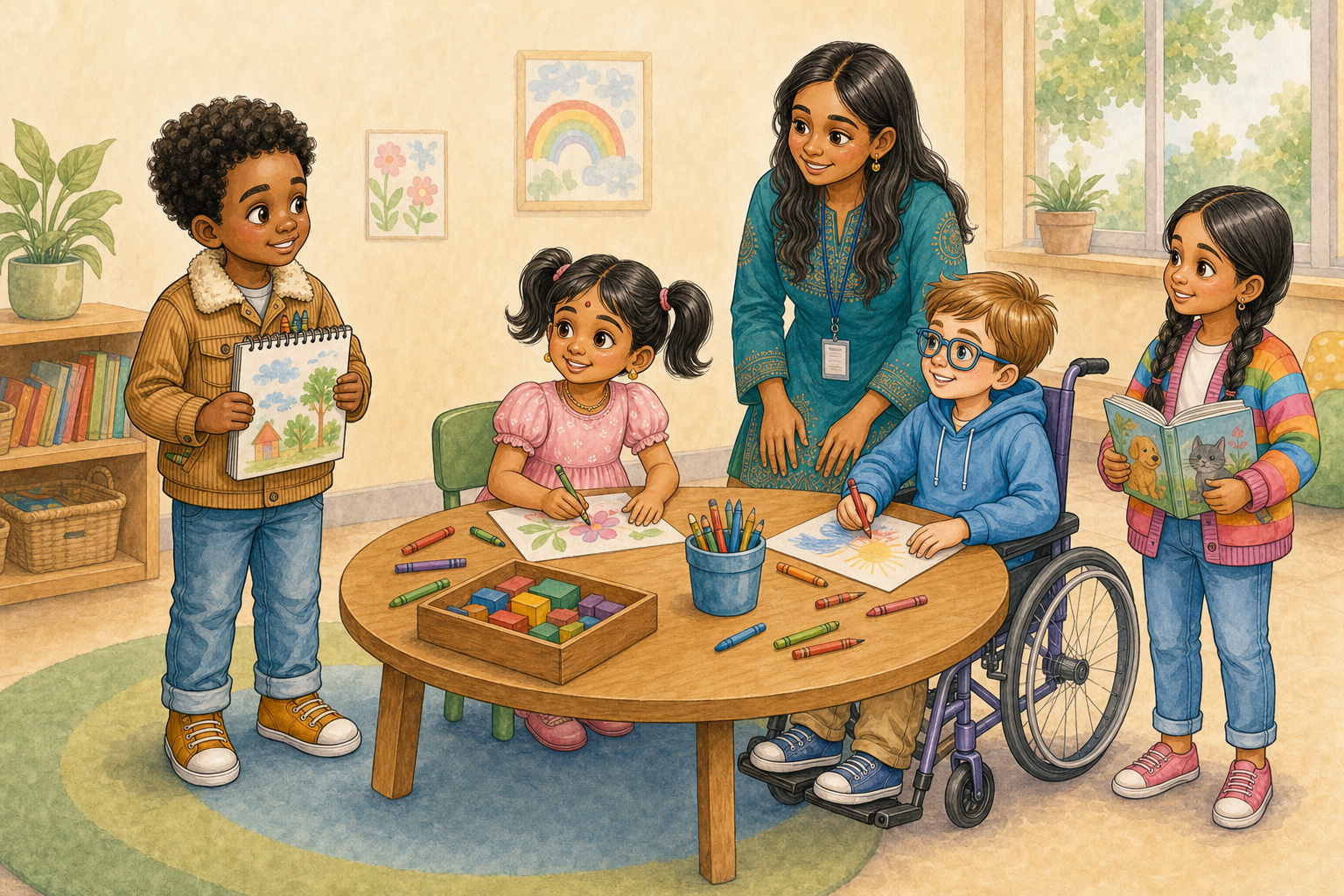
Mamadou likes drawing.
Ben likes stories and games.
Anya likes making things.
A shared interest can help people start.
Joining in
I can ask to join.
I can use words, a card, a gesture or ask a grown-up to help me.
Asking is a friendly choice.
Waiting for an answer
The answer might be yes, later or not now.
A “not now” answer can feel hard. It does not mean I did something wrong.
When it feels hard
If it is not now, I can still be okay.

I might feel sad, cross or wobbly.
All feelings are okay.
I can take three breaths.
I can draw, ask for help or choose another activity.
I can try again another time.
Talking and listening
Friends take turns.
Taking turns with words can help friendship feel fair.
Safe space
My body can be friendly and safe.
Some people like more space. Some people like less space.
I can look, listen and ask.
Trying again
If something goes wrong, I can repair.
A repair might be saying sorry, giving space, returning something, or trying a safer choice.
A mistake is not the end of a friendship.
Who can help
A grown-up can help friendship feel easier.
I do not have to work out friendship all by myself.
Friendship grows
Little by little, familiar faces can become known.
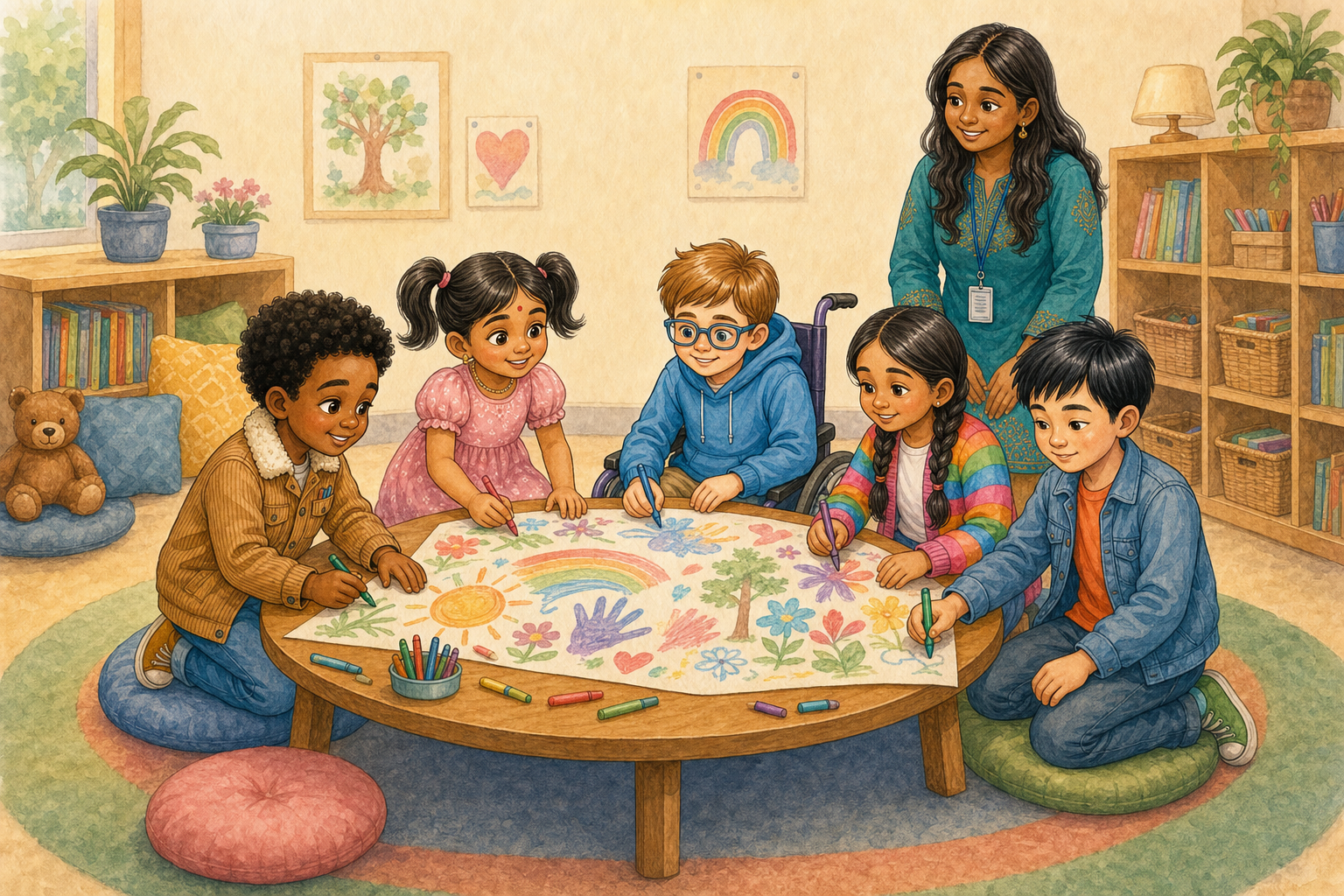
I may see the same children again.
I can practise one friendly choice.
Some people may become classmates I know.
Friendships can grow one kind moment at a time.
Reading this story · Making Friends at School
Read this when the child is regulated. Practise friendship scripts before they are needed.
Choose one target at a time: waving, asking to join, waiting, sharing, or repairing.
Do not force eye contact, hugging or immediate play. Small connection attempts count.
Role-play yes, later and not now, then practise a calm next choice.
Add real names, familiar play spaces, clubs, lunchtime routines and trusted adults.
More free SEND Parents Haven resources: sendparentshaven.org/free-resources