When School Feels Too Much
A story about big feelings, asking for help,
taking a break and coming back slowly.

A story about big feelings, asking for help,
taking a break and coming back slowly.
Personalise
This story can be about me.
I am learning what helps when school feels too much.
I do not have to manage big feelings all by myself.
What can happen
Sometimes school can feel too much.
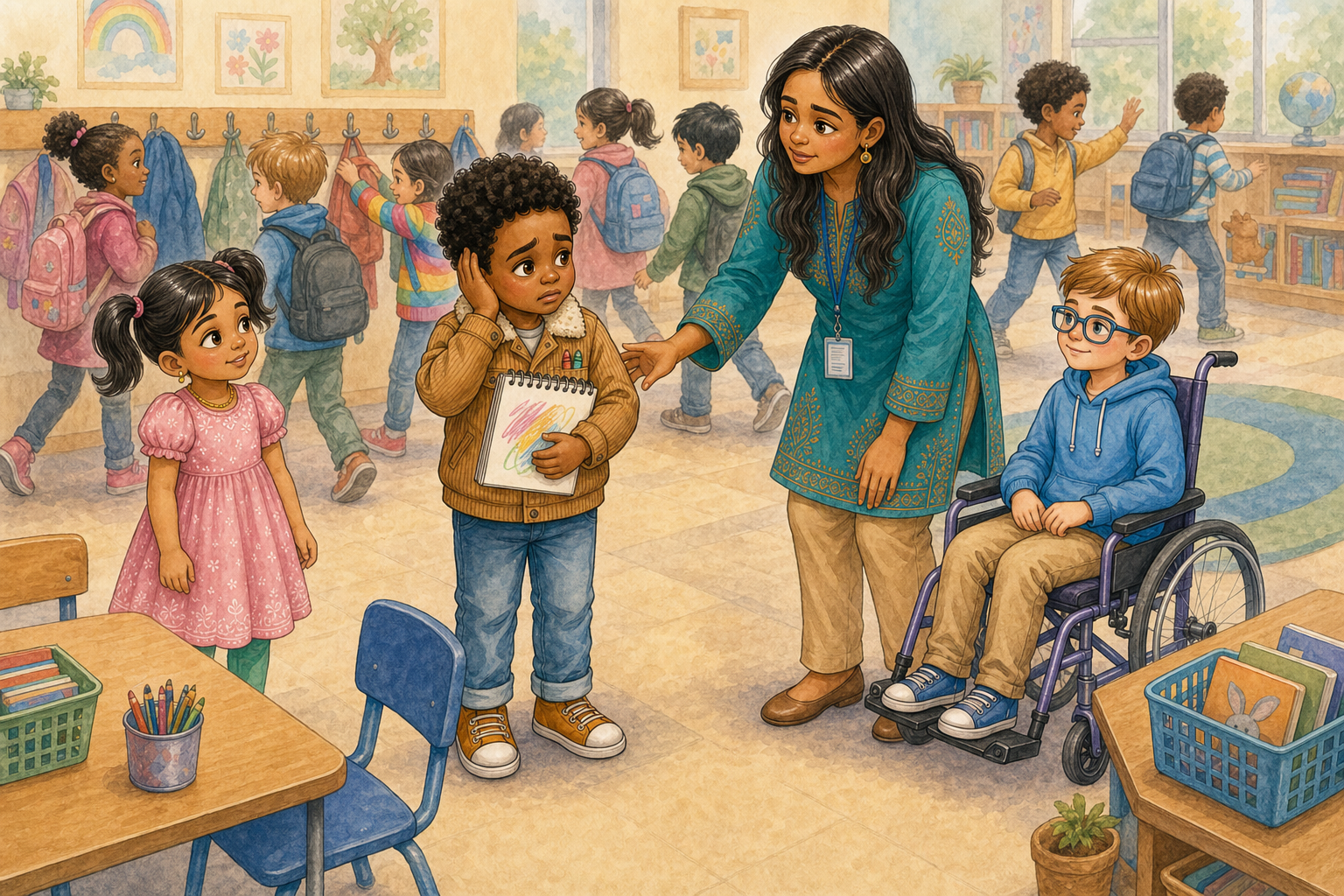
School can be noisy.
School can be bright.
School can be busy.
When school feels too much, I am not bad. I am having a hard moment.
Body clues
My body may give me clues.
Body clues are information.
My body is trying to tell me something.
Feelings
Big feelings are allowed.
A feeling can be big and still be okay.
A feeling is not a rule. A feeling is a message.
Grown-ups can help me understand the message.
Asking for help
I can show a grown-up.
I can use words, a card, a gesture, my face, or point to how I feel.
Asking for help is a strong choice.
Calm plan
A grown-up can help me choose a plan.
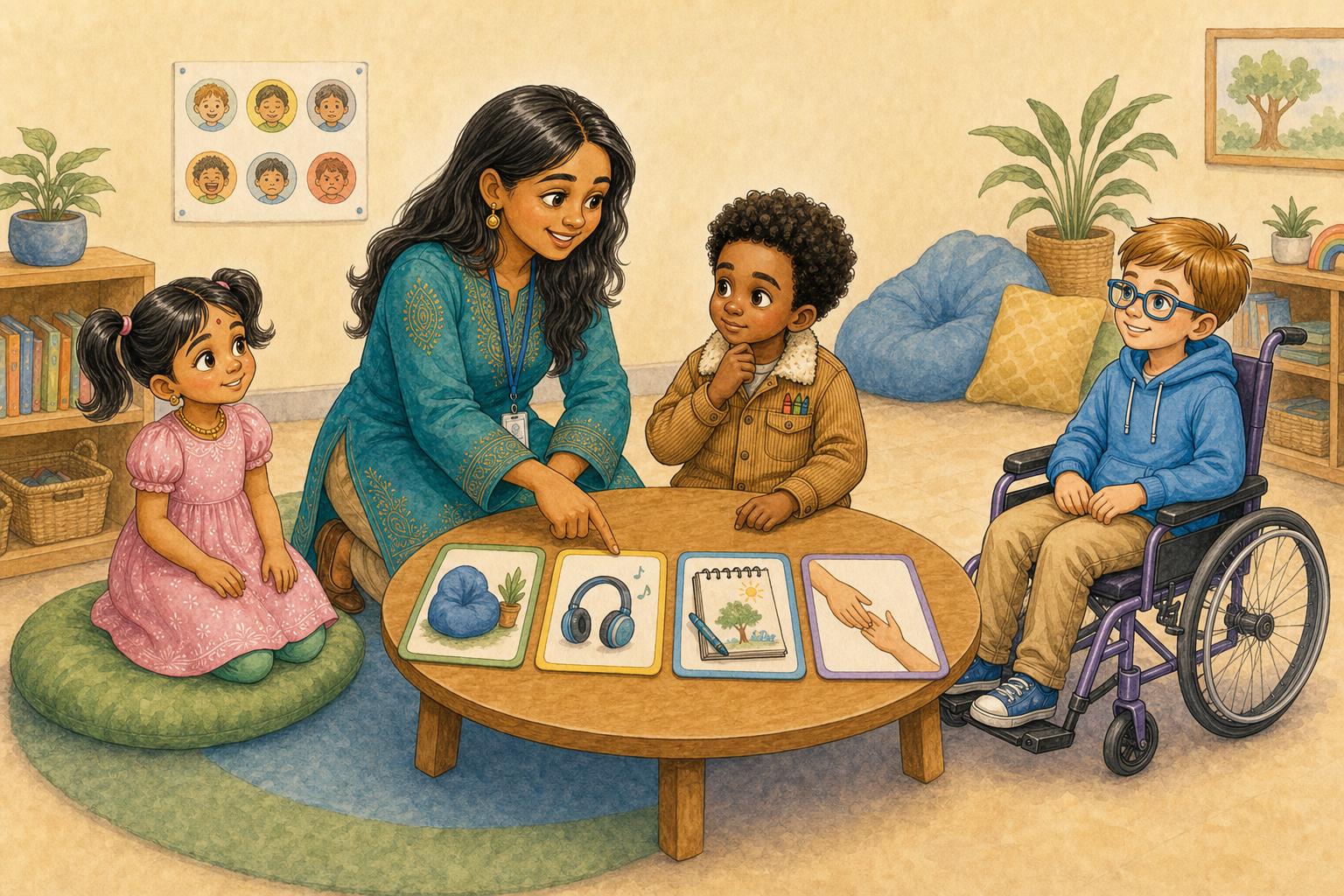
The grown-up can speak gently.
The grown-up can give me choices.
The grown-up can help me find what my body needs.
I do not have to choose while my feelings are huge.
Taking a break
A break can help my body feel safer.
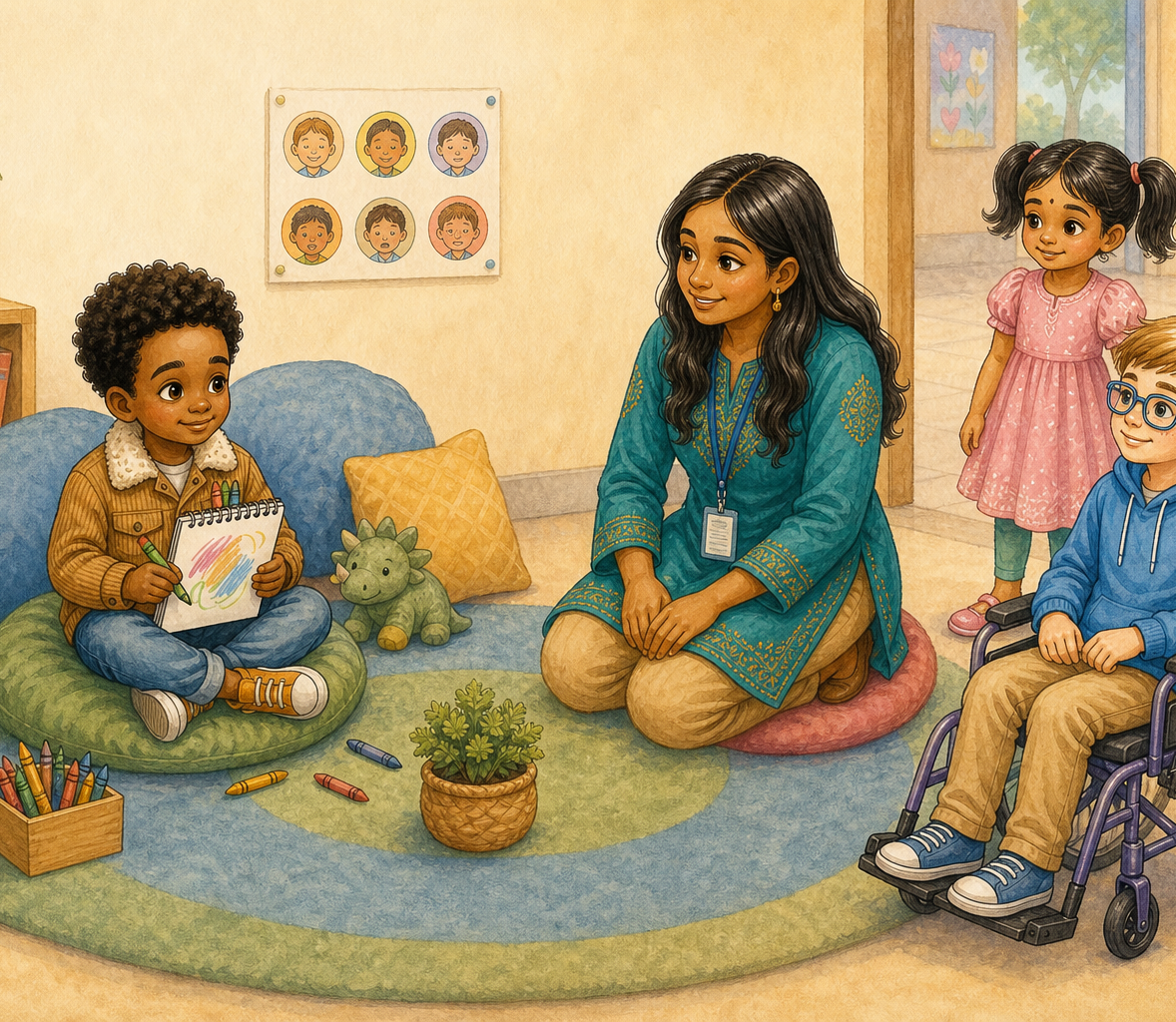
A break is not a punishment.
A break can give my body less to manage.
I can sit, draw, breathe or be quiet.
I can have space and still belong.
What can help
Calming choices can be small.
One small calming choice can help my body start to settle.
I can practise when I am already calm.
No words needed
If words are hard, I can point.
My grown-up can listen to my body language too.
Returning
I can come back slowly.
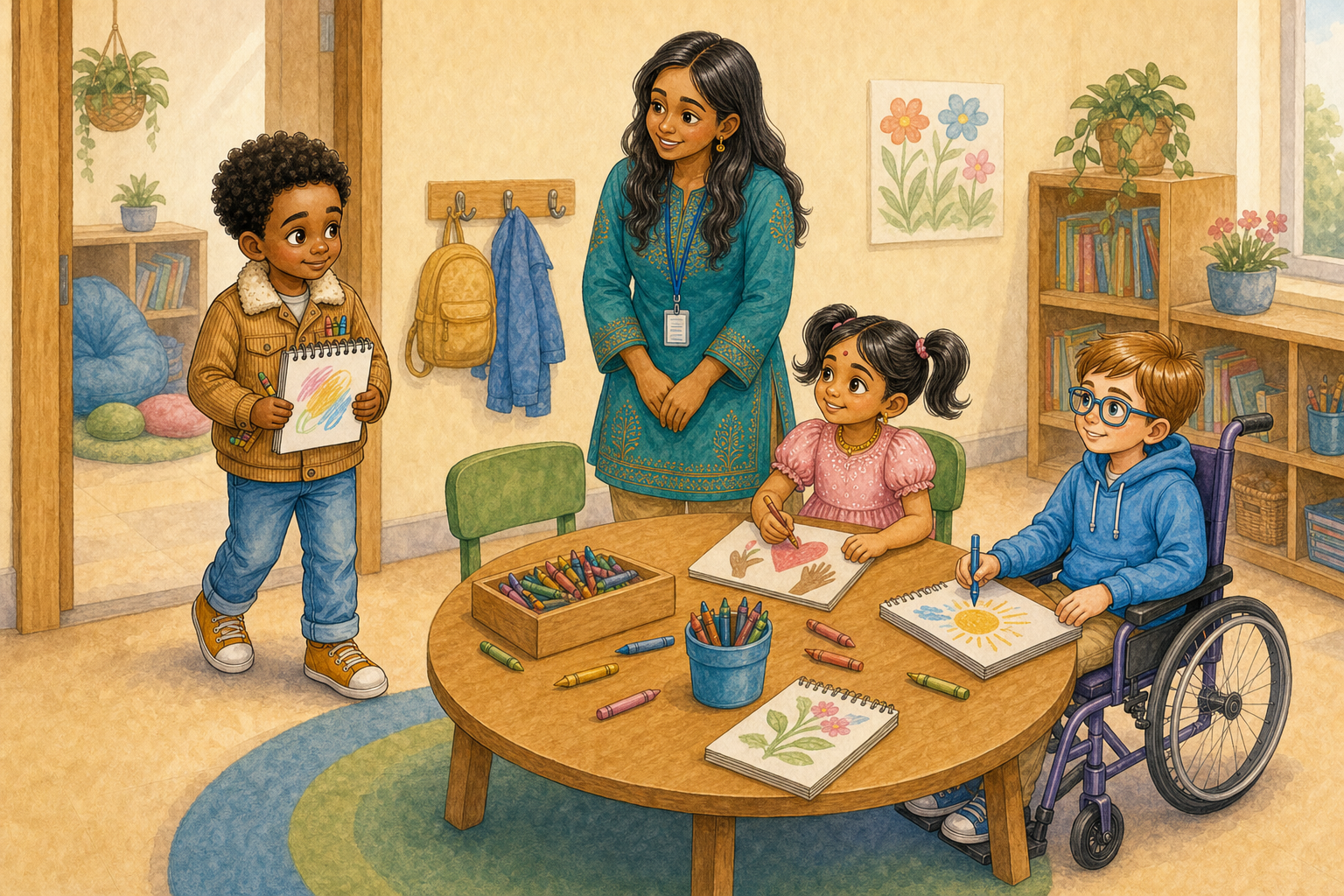
When my body feels safer, I might be ready to return.
I can return to one small job.
I can sit near a grown-up.
Coming back slowly still counts.
More time
If I cannot come back yet, I can still be safe.
Needing more time does not mean I have failed.
One day at a time
Little by little, I can learn what helps.
Some days will feel easier. Some days will feel harder.
I can do hard moments with help.
Reading this story · When School Feels Too Much
Use this story before difficult moments. Practise the plan when the child is regulated.
Keep visuals available: feelings, needs, break, help, headphones, water, drawing and quiet space.
Use low-pressure language: “Your body is telling us something” and “Let’s find what helps.”
Talk about what happened after the child is settled. During overwhelm, focus on safety and regulation.
Add the real calm place, trusted adults, sensory supports, break card and return routine.
More free SEND Parents Haven resources: sendparentshaven.org/free-resources